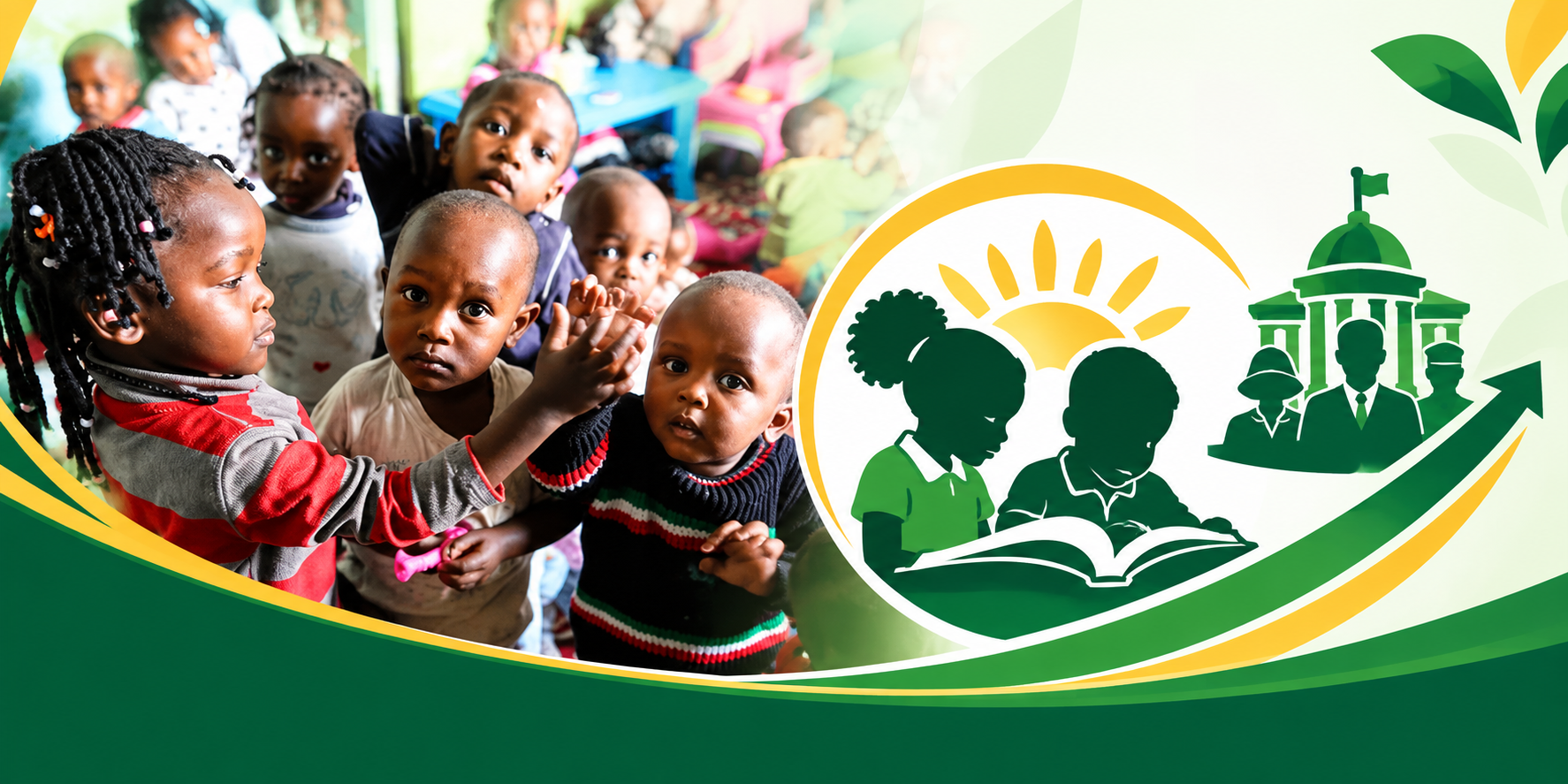
To address extreme poverty and build a stronger foundation for
national development, the
Early Childhood Association of Nigeria (ECAN)
has called on governments at all levels to increase investment
in Early Childhood Development, Care and Pre-primary Education.
Such investment is essential for promoting shared prosperity,
strengthening human capital and supporting economic
diversification and sustainable growth.
01
The First Virtual Annual Conference
The call was made during the first virtual annual conference of the
Early Childhood Association of Nigeria (ECAN),
hosted by the Department of Early Childhood and Educational
Foundations, University of Ibadan.
Conference Theme:
“Quality, Equitable, and Context-Based Early Childhood Care and
Pre-primary Education: The Journey to 2030”
The conference brought attention to the importance of quality,
equitable and context-responsive early childhood education as a
foundation for children's development and as a critical component
of Nigeria's long-term human-capital development agenda.
02
Communiqué of the Association
In a communiqué signed by
Dr. Amosun Moses, Dr. Olowe Peter K., and
Dr. Olabisi Adedigba, the Association emphasized that
Early Childhood Development, Care and Pre-primary Education is
crucial to realizing the full potential of every child and is
fundamental to building a sustainable society.
ECAN therefore called for greater attention to Early Childhood
Development, Care and Pre-primary Education by the Government of
Nigeria at all levels, including through relevant representative
institutions and agencies such as the Universal Basic Education
Commission (UBEC) and the Federal Ministry of Women Affairs.
03
Expanding Access to Early Childhood Education
To ensure continuous access of Nigerian children to Early Childhood
Development, Care and Pre-primary Education, particularly during
public-health emergencies such as the Coronavirus pandemic, ECAN
called for the adoption of alternative and complementary approaches
to programme delivery.
Community-Based ECCDE
Development and expansion of community-based Early Childhood
Care, Development and Education programmes capable of
reaching children in underserved communities.
Parental Empowerment
Strengthening parents and caregivers with knowledge and
practical skills for responsive caregiving and early
learning at home.
Rural Outreach
Deployment of qualified Early Childhood Education social
workers and other relevant professionals to rural and
underserved areas.
Stakeholder Collaboration
Greater collaboration among government, ECE practitioners,
academic faculties and non-governmental organizations to
sustain access and improve programme delivery.
04
Strengthening Governance and Institutional Coordination
ECAN called for consideration of a dedicated ministry or government
body responsible for Early Childhood Development, Care and
Pre-primary Education. According to the Association, a more
dedicated institutional structure could support effective
implementation, monitoring, coordination and management of the
programme.
Key governance priorities:
stronger institutional coordination, effective implementation,
continuous monitoring, adequate management structures and sustained
government commitment to early childhood development.
05
Increased Investment in Early Childhood Education
“The Government of Nigeria, at all levels, should invest more
in the programme of Early Childhood Development, Care and
Pre-primary Education through provision of adequate facilities,
resources and increased budgeting allocation.”
ECAN further emphasized the importance of equipping early childhood
education settings with adequate facilities, teaching resources and
financial support. Teachers across nursery, pre-primary and tertiary
levels were encouraged to develop practical approaches through which
children can engage with culturally relevant content and
context-based learning activities.
06
Culturally Relevant Curriculum and Context-Based Learning
ECAN noted that curricula used for Early Childhood Development, Care
and Pre-primary Education at pre-primary and tertiary education
levels should be reviewed and reorganized to sufficiently reflect
culturally relevant content, indigenous knowledge and context-based
approaches to learning.
Such approaches can help make learning more meaningful to children
by connecting educational experiences with their communities,
cultures, environments and everyday experiences.
07
Professional Development and Capacity Building
The Association called on the Government of Nigeria and development
partners, including organizations such as UNESCO and UNICEF, to
invest in training programmes capable of equipping teachers,
caregivers and lecturers with the knowledge and skills required to
plan and implement effective Early Childhood Development, Care and
Pre-primary Education programmes.
Such capacity-building initiatives should address the needs of
in-service teachers, pre-service teachers and lecturers and should
support the achievement of the 2030 Global Agenda within the
Nigerian context.
In-Service Teachers
Pre-Service Teachers
Lecturers
08
Early Childhood Education and the 2030 Global Agenda
ECAN emphasized that when Early Childhood Development, Care and
Pre-primary Education is culturally responsive, adequately
supported and equitably accessible, it can contribute significantly
to the achievement of the 2030 Global Agenda in Nigeria.
Caregivers and teachers were identified as central actors in
translating early childhood policies and programmes into meaningful
experiences for children. Their professional capacity, working
conditions, resources and ability to respond to children's diverse
needs are therefore critical to programme quality.
Quality early childhood education is not only an education
concern; it is also a human-capital, social-development and
sustainable-development priority.
09
Reaching Every Category of the Nigerian Child
ECAN called on the Government of Nigeria and all relevant
stakeholders to intensify efforts to reach every category of the
Nigerian child with quality Early Childhood Development, Care and
Pre-primary Education.
Orphans and Vulnerable Children
Ensure that vulnerable children are not excluded from
quality early childhood programmes because of social or
economic circumstances.
Out-of-School Children
Develop approaches capable of reaching children who are
outside conventional educational settings.
Educationally Challenged Children
Promote appropriate support systems and learning approaches
responsive to diverse educational needs.
Children in IDP Communities
Extend quality early childhood services to children living
in internally displaced persons and other emergency
settings.
Children with Special Needs
Promote inclusive approaches that enable children with
disabilities and special educational needs to participate
meaningfully in early learning.
Underserved Communities
Strengthen outreach and community-based solutions for
children who have limited access to formal early childhood
education services.
10
A Shared Responsibility
Achieving equitable and quality Early Childhood Development, Care and
Pre-primary Education requires sustained collaboration among
government, educators, families, communities, development partners,
non-governmental organizations and other relevant stakeholders.
Government
ECE Practitioners
Universities & Faculties
Parents & Caregivers
NGOs
Development Partners
11
Communiqué Signatories
Dr. Amosun Moses
Communiqué Signatory
Dr. Olowe Peter K.
Communiqué Signatory
Dr. Olabisi Adedigba
Communiqué Signatory
Investing in Children Means Investing in Nigeria's Future
ECAN's call emphasizes the importance of placing Early Childhood
Development, Care and Pre-primary Education at the centre of
Nigeria's human-capital development efforts and ensuring that
quality early learning opportunities are accessible to every child.