
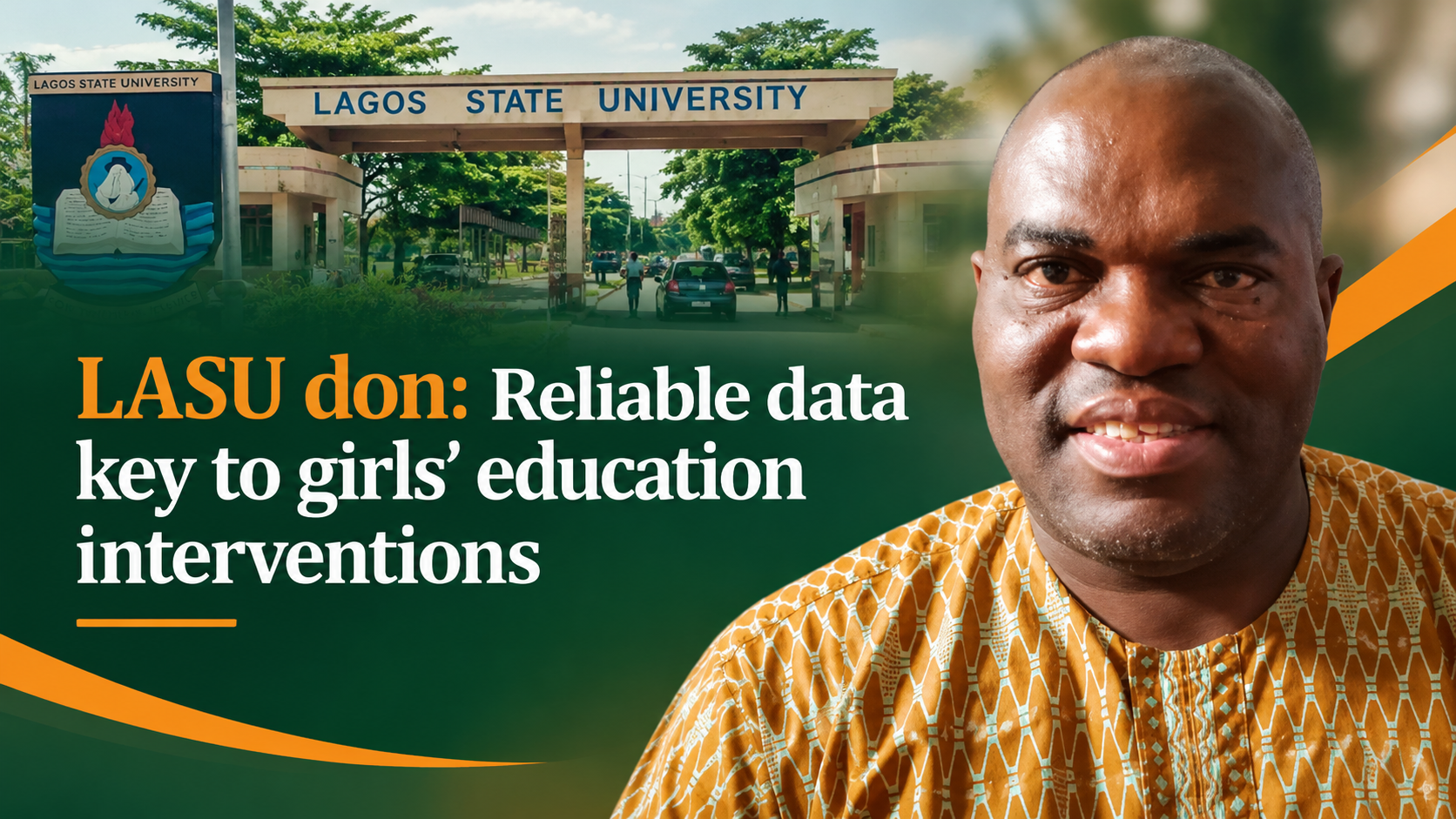
LASU Don: Reliable Data Key to Girls’ Education Interventions
Professor Babajide Abidogun calls for a reliable national database to identify vulnerable girls, improve education interventions and ensure that no girl is left behind.
Abidogun, Head of Educational Foundations and Counselling Psychology at Lagos State University (LASU), told The Nation that Nigeria needs comprehensive data showing how many girls have never enrolled in school, dropped out, or remain enrolled but are at risk of abandoning their education.
Beyond School Enrolment
According to the education scholar, tracking enrolment alone is insufficient. Education authorities must also monitor attendance, retention, transitions between school levels and completion rates to understand whether girls are receiving the sustained support they need to complete their education.
Reliable data is essential for identifying the girls who need support, understanding why they are out of school and determining the interventions that will help them return and remain in education.
He explained that disaggregated data across states, local government areas and vulnerable communities would help authorities identify the barriers preventing girls from accessing and completing their education. These barriers include poverty, insecurity, early marriage and inadequate school facilities.
Evidence for Better Education Investment
Abidogun warned that unreliable or incomplete data could result in education funds being directed away from the communities with the greatest needs. He therefore called on federal and state governments to strengthen education data systems, verify school records regularly and evaluate the impact of interventions designed to support girls.
What Reliable Education Data Can Support
- Identifying girls who are out of school or at risk of dropping out.
- Targeting scholarships, school meals and financial assistance.
- Improving teacher deployment and school construction planning.
- Guiding education budgets and policy decisions.
- Measuring intervention outcomes and strengthening public accountability.
He added that credible statistics should inform decisions about teacher deployment, school infrastructure and budgetary priorities. Reliable data would also enable the public to assess government performance and determine whether education programmes are delivering meaningful results.
The Wider Impact of Excluding Girls
Abidogun cautioned that excluding millions of girls from education could weaken Nigeria’s human capital, reduce economic productivity and deprive the country of future professionals, entrepreneurs and innovators.
He called for a coordinated system that follows every girl’s educational journey, from initial enrolment through completion. Such a system, he stressed, must establish who is being reached, who is being left behind and what changes are needed to close persistent education gaps.
Strengthening Accountability Through Transparency
The professor further emphasised the importance of regularly publishing credible education statistics. Making this information accessible would help citizens, education stakeholders and development partners assess progress, identify persistent gaps and advocate timely action where interventions are falling short.
His call highlights the importance of evidence-based education planning: effective interventions begin with understanding the needs of the girls they are intended to support. Accurate, regularly updated data can help Nigeria make better-informed decisions and advance more inclusive educational opportunities for every girl.